
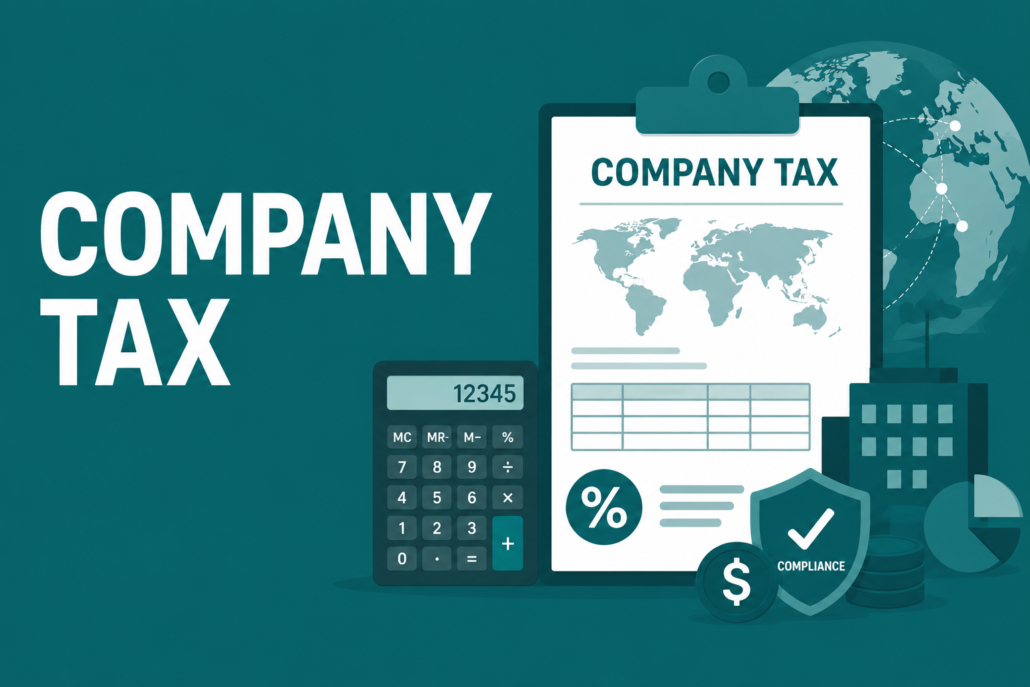
How to File Company Tax in Canada
Filing company tax in Canada is a critical responsibility for every business owner. Whether you operate a small startup, a growing corporation, or a large enterprise, understanding how corporate taxes work can help you stay compliant, avoid penalties, and maximize your profits.
The Canadian tax system is structured, transparent, and designed to accommodate businesses of all sizes. However, if you’re unfamiliar with the process, it can feel complex at first.
This comprehensive guide explains exactly how to file company tax in Canada, step by step, in clear and human-friendly language.
1. Understanding the Canadian Corporate Tax System
Corporate taxes in Canada are administered by the Canada Revenue Agency (CRA).
Businesses in Canada must pay:
- Federal corporate tax
- Provincial or territorial tax
These taxes are applied to your company’s taxable income.
2. Determine Your Business Structure
Before filing taxes, you must identify your business structure.
Sole Proprietorship
- Not a separate legal entity
- Income reported on personal tax return
Partnership
- Shared ownership
- Income passed to partners
Corporation
- Separate legal entity
- Must file its own corporate tax return
This guide focuses on corporations, as they are required to file a corporate tax return.
3. Register Your Corporation with CRA
To file company tax, your business must be registered with the Canada Revenue Agency.
You’ll Need:
- Business Number (BN)
- Corporation details
- Fiscal year-end
The Business Number (BN) acts as your company’s tax ID.
4. Understand Your Tax Obligations
Canadian corporations must comply with several tax requirements:
Corporate Income Tax
Based on company profits.
Goods and Services Tax (GST/HST)
Applies to sales of goods/services.
Payroll Taxes
If you have employees:
- CPP (Canada Pension Plan)
- EI (Employment Insurance)
Provincial Taxes
Rates vary by province.
5. Know Your Fiscal Year-End
Unlike personal taxes, corporations can choose their fiscal year.
Example
- Fiscal year: Jan 1 – Dec 31
- Or any 12-month period
Your tax filing deadline depends on your fiscal year-end.
6. Maintain Proper Financial Records
Accurate recordkeeping is essential.
Keep Track Of:
- Revenue
- Expenses
- Payroll
- Receipts and invoices
- Bank statements
Good records ensure smooth filing and protect you during audits.
7. Prepare Financial Statements
Before filing taxes, prepare:
- Income Statement
- Balance Sheet
- Cash Flow Statement
These documents summarize your company’s financial performance.
8. Complete the T2 Corporate Tax Return
All corporations must file a T2 Corporation Income Tax Return.
Key Components of T2
- Business information
- Financial data
- Tax calculations
- Schedules
Even if your corporation has no income, you must still file a T2 return.
9. Understand Tax Rates in Canada
Corporate tax rates include:
Federal Rate
- General: 15%
Small Business Rate
- Reduced rate for eligible businesses
Provincial Rates
- Vary depending on location
Combined rates typically range between 12% and 26%.
10. Calculate Taxable Income
Your taxable income is:
Revenue – Expenses = Taxable Income
Deductible Expenses
- Salaries and wages
- Rent
- Utilities
- Marketing
- Office supplies
Deductions reduce your tax burden.
11. Claim Business Deductions and Credits
Understanding deductions is key to reducing taxes.
Common Deductions
- Operating expenses
- Depreciation (Capital Cost Allowance – CCA)
- Interest on loans
Tax Credits
- Scientific Research & Experimental Development (SR&ED)
- Investment tax credits
12. File Your T2 Return
You can file:
Electronically (EFILE)
- Fast and recommended by the Canada Revenue Agency
Paper Filing
- Slower and less efficient
Most corporations must file electronically.
13. Pay Your Corporate Taxes
Payment Options
- Online banking
- CRA My Payment
- Wire transfer
Payments must be made within 2–3 months after fiscal year-end.
14. Understand Filing Deadlines
T2 Filing Deadline
- 6 months after fiscal year-end
Tax Payment Deadline
- 2 or 3 months after year-end
Missing deadlines results in penalties.
15. Pay Taxes in Installments
Many corporations must pay taxes in installments.
Monthly or Quarterly Payments
Based on previous year’s tax liability.
This helps manage cash flow and avoid large payments.
16. Handle GST/HST Filing
If registered for GST/HST:
- File returns regularly
- Collect and remit tax
Failure to comply can result in penalties.
17. Real-Life Example: Small Corporation
Profile
- Business: Local Retail Store
- Revenue: $200,000
- Expenses: $120,000
Taxable Income
- $80,000
Tax Filing
- Files T2 return
- Applies small business tax rate
Outcome
- Lower tax liability due to deductions
18. Real-Life Example: Startup Company
Profile
- Business: Tech Startup
- Revenue: $500,000
- Expenses: $450,000
Taxable Income
- $50,000
Credits Used
- SR&ED tax credit
Outcome
- Significant tax savings
19. Common Mistakes to Avoid
- Missing deadlines
- Poor recordkeeping
- Incorrect expense claims
- Not filing T2 return
- Ignoring installment payments
Avoiding these mistakes ensures smooth compliance.
20. Prepare for CRA Audits
The Canada Revenue Agency may audit your business.
How to Prepare
- Keep records for at least 6 years
- Maintain receipts
- Ensure accurate reporting
21. Use Accounting Software
Popular tools include:
- QuickBooks
- Xero
- Sage
These tools simplify bookkeeping and tax filing.
22. Hire a Professional Accountant
A tax professional can:
- Maximize deductions
- Ensure compliance
- Reduce risk of errors
This is especially useful for growing businesses.
23. Plan for Future Taxes
Smart tax planning includes:
- Setting aside funds
- Reviewing financial statements
- Optimizing deductions
24. Benefits of Filing Taxes Properly
- Avoid penalties
- Improve financial management
- Build business credibility
- Support growth
25. Final Thoughts
Learning how to file company tax in Canada is essential for every business owner. While the process may seem complex, breaking it into steps makes it manageable.
Focus on:
- Understanding your obligations
- Keeping accurate records
- Filing on time
- Using deductions wisely
With the right approach, tax filing becomes not just a requirement—but a strategic advantage for your business.

Leave a Reply
Want to join the discussion?Feel free to contribute!